Our Founder
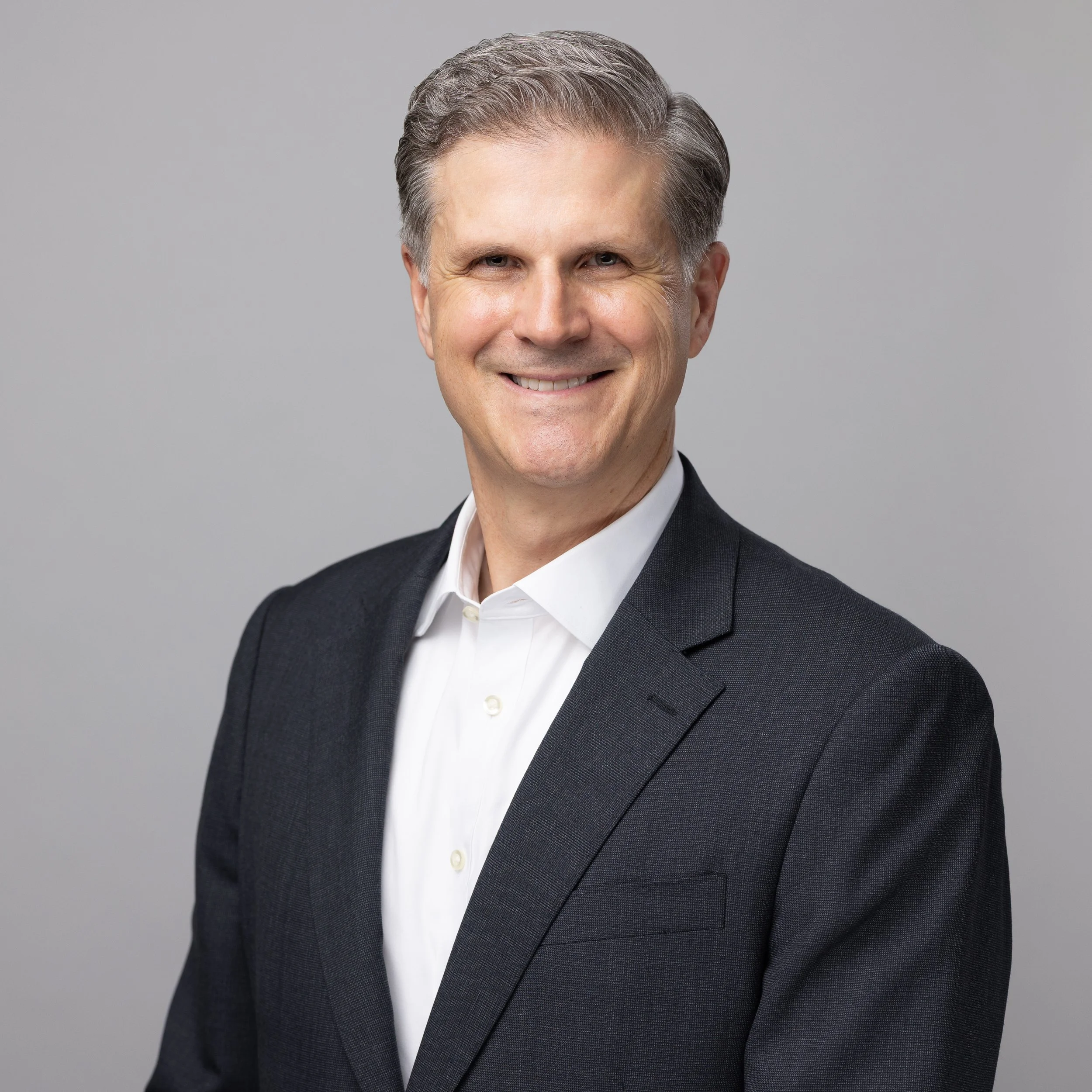
Paul H. DeLaney, III is the Founder and Principal of Delphi Trias Group, an independent government relations, client advisory, and advocacy practice based in Washington, D.C. Over 25 years across five U.S. Administrations, Paul has directly shaped policy, designed and implemented company advocacy plans, and advocated for his company, his clients, and trade association members to consistently achieve significant and creative results. He has served in senior roles across government, corporate leadership, and private advisory practice.
In senior government service, Paul served as International Trade Counsel to the U.S. Senate Committee on Finance, advising Chairman and Ranking Member Orrin Hatch and Republican Finance Committee Senators on trade, investment, customs, and international tax policy. He earlier served as Deputy Chief of Staff at the Office of the U.S. Trade Representative in the Bush Administration under Ambassadors Rob Portman and Susan Schwab, leading work across all aspects of USTR's policy agenda and operations.
In corporate and trade association leadership, Paul most recently led the Washington office of SK Americas, representing a Fortune Global 500 South Korean conglomerate. He managed the team’s work on trade, supply chain, semiconductor, energy, AI, and manufacturing business policy priorities at all levels of federal and state government, while managing an extensive group of outside consultants, law firms, think tank relationships, and trade association memberships. He previously led the Business Roundtable's trade and international work, managing a CEO-level committee chaired first by the CEO of Cummins and later by the CEO of Union Pacific, and working with three Business Roundtable CEO Chairs and their teams from J.P. Morgan, Walmart, and GM to advance BRT member trade, supply chain, and international priorities. Paul played a central advocacy role in the negotiation, enactment, and implementation of USMCA and the enactment of the CHIPS and Science Act. Earlier in his career, Paul led international trade policy advocacy in D.C. at FedEx Express and worked with USTR, Commerce, and other federal agencies as well as advocated for the company’s priorities with foreign governments, the WTO, APEC, ASEAN, and other international organizations.
In client advisory and advocacy work, Paul founded Delphi Trias Group as an independent advisory practice to support client’s trade, technology, supply chain, and international priorities. Previously, he was a partner at the Kyle House Group, where he advanced Fortune 500 client priorities across trade, technology, national security, investment, and regulatory issues. He worked with his brother, the Founding Partner of Kyle House Group, to build up the firm’s commercial practice. After law school, Paul worked as an associate in the white-collar litigation and government investigations practice at Vinson & Elkins, LLP in the Washington, D.C. office.
Paul holds a J.D. from the University of Virginia School of Law and a B.A. in Political Science from Yale University. He is admitted to practice in Virginia and the District of Columbia, serves as Treasurer and Board member of the Washington International Trade Association, and sits on the Advisory Board of the Indiana University Manufacturing Policy Initiative.
Our Name and Logo
Delphi Trias Group takes its name from two traditions that, together, symbolize the firm's approach to client service and achieving durable results. Delphi Trias Group is pronounced DEL-fye TRY-us.
Delphi was home to the ancient world's most trusted source of counsel — a place travelers from different lands went not for easy answers, but for clarity and guidance before making consequential decisions. Inscribed at the Temple of Apollo were three maxims that still hold up as principles for sound judgment in a consulting firm's work with clients today:
Know Thyself — understand your own experience, capabilities and limits, and harness them to best understand your client's position, goals, and blind spots to support them.
Nothing in Excess — adopt the discipline of proportion and take a balanced approach to strategic counsel and advocacy grounded in core client priorities and long-term objectives, even in the face of volatile policy shifts and distractions.
Certainty Brings Ruin — over time technological innovations, policy paradigms and political power structures shift, and can change suddenly and significantly. Wise counsel demands vigilance and caution against overconfidence and absolute viewpoints. Never stop testing your assumptions, adapt your strategy and tactics, and never assume the outcome is fixed.
Trias is a word shared by Greek and Latin. Greek in origin (τριάς, “triad”), and carried into Latin as the classical vocabulary for a group of three. The tripartite framework has a long life in the history of self-government. The Greek historian Polybius in the 2nd century BC praised the Roman Republic's constitution as a balance of three pillars — the consuls, the Senate, and the people — each checking the others so that no single part could dominate the system. That same principle of three balanced and competing powers shaped the framers' design of the U.S. constitutional system. That constitutional republic idea is also reflected in Washington, D.C.'s own architecture — from the U.S. Capitol to the columned federal buildings and monuments that define the city.
For the firm, Trias also signifies the three-part framework employed to support its clients: thesis, antithesis, synthesis. Delphi Trias Group commits to fully understanding a client's position and goals, testing them rigorously against what opposes them, and synthesizing a strategy to resolve the two into a course of action that holds up under pressure and rapidly shifting dynamics. Trias also nods to Paul H. DeLaney, III's own name, as Paul is the third to carry it, and his father was also an accomplished trade lawyer.
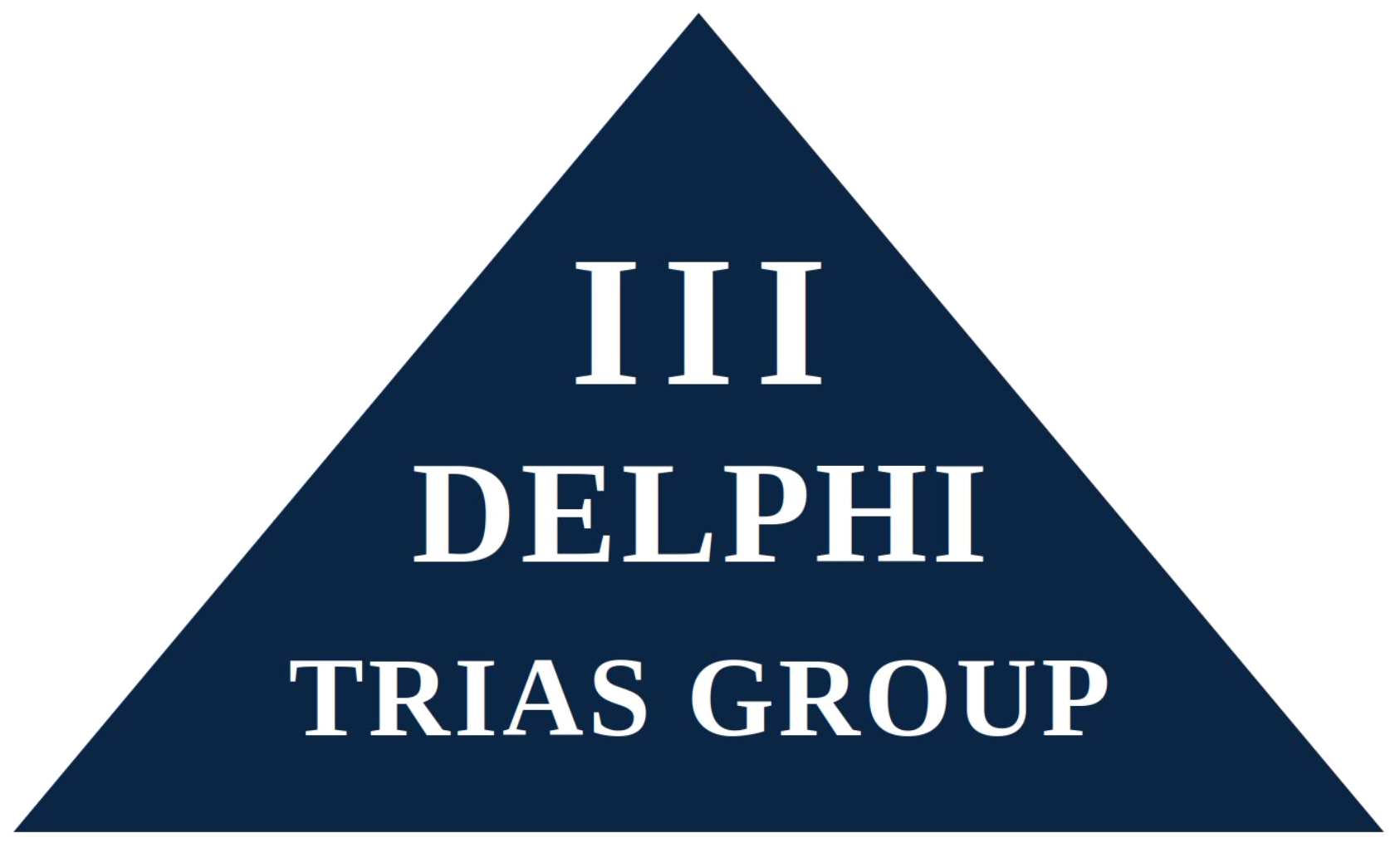
The firm's three-sided pyramid mark carries all three of these ideas forward in a single image. Its three points, each bearing weight and each supporting the others, echo the word's own etymology as a group of three. And the three “I”'s at its center — the roman numeral itself a nod to the founder's own name — double as columns holding up the triangle from within and bringing balance and stability.